Think about the last negotiation that went quiet on you. Maybe a candidate asked for a few days to consider the offer and hasn’t replied since, or a proposal your manager seemed happy with is still waiting for sign-off. Nobody said no, so you’re left guessing whether to follow up, wait it out or change something.
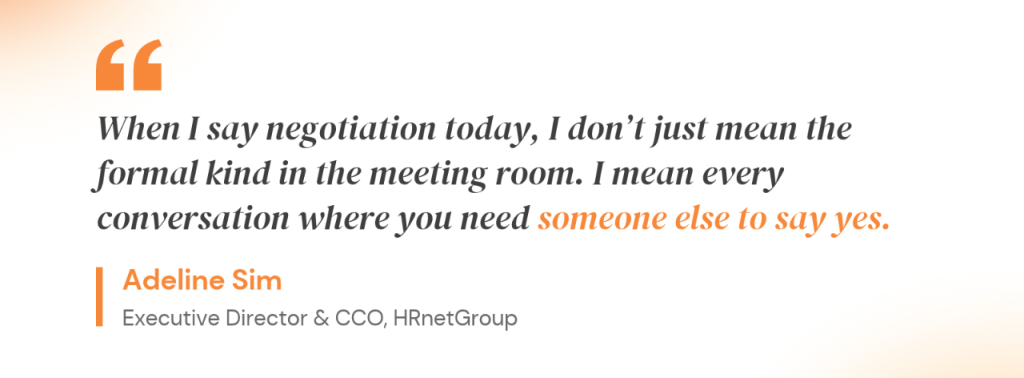
That guessing game is what Read the Room: What to Do when Negotiations Stalemate set out to unpack. In this virtual workshop by HRnetRimbun Indonesia, Adeline Sim, Executive Director and Chief Corporate Officer of HRnetGroup, and Rubby Lim, Business Leader of HRnetRimbun Indonesia, shared how they handle the conversations that stop moving, then put their thinking to work on real cases participants brought with them.
The Hardest Table Is Often Your Own
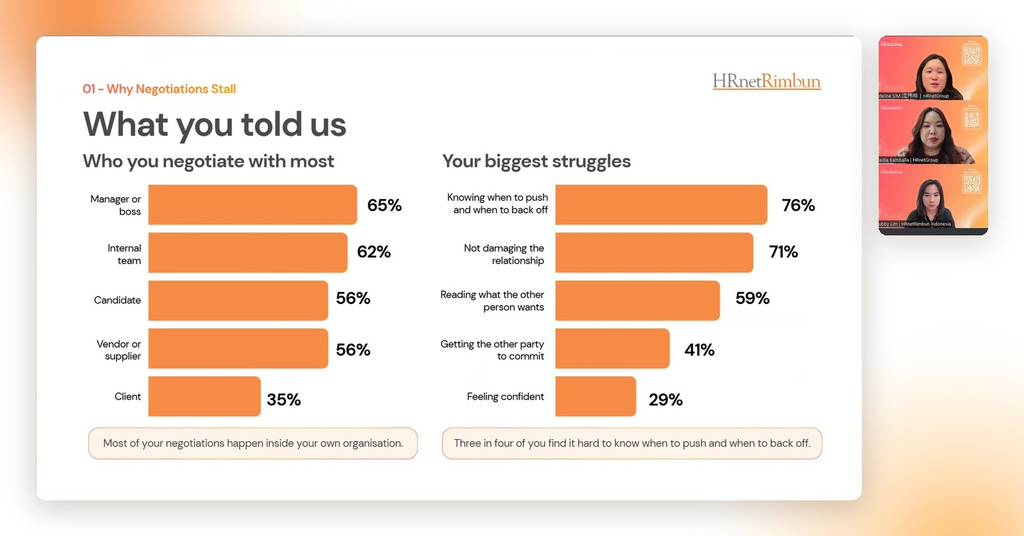
We tend to picture negotiation happening across a boardroom table, with a client on the other side. Our pre-event survey told a different story.
When we asked participants where their negotiations actually take place, most pointed inside their own organisations, with their manager or their own team. And when we asked what they find hardest, three in four gave the same answer: knowing when to push and when to back off.
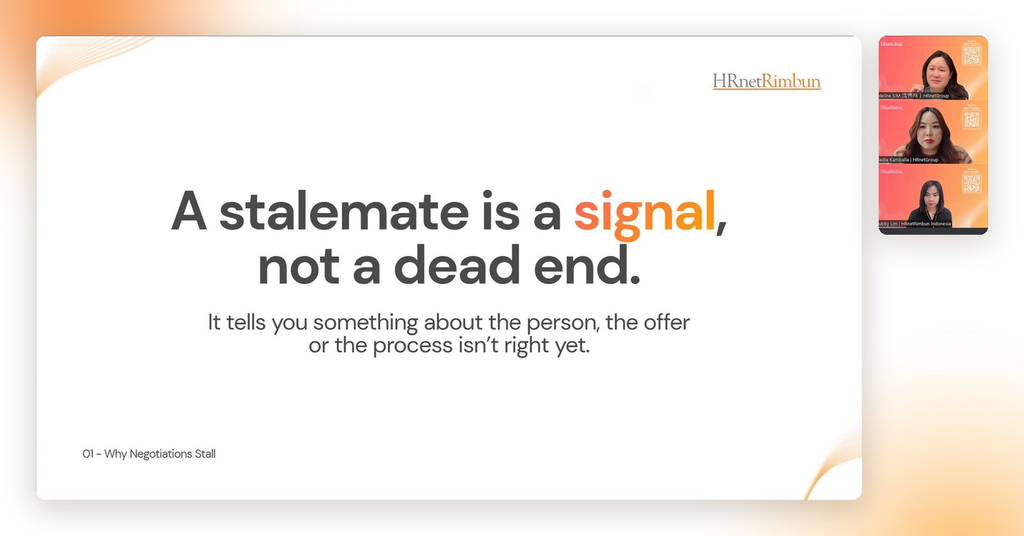
That tension is where Adeline started. Her suggestion was to treat the stall itself as information. A stalemate, she argued, is a signal worth reading: it tells you something about the person, the offer or the process that isn’t right yet. Read it well, and the conversation usually finds its way forward again.
Reading the Person Across the Table
So what is it signalling? Often, that we have been using the same approach with everyone. Adeline walked through the framework HRnetGroup uses to read the person in front of you, built on two questions. Does this person lean towards relationships or tasks? And do they move fast or slow?
The answers point to different personality types, each needing something different from you before they say yes. Nobody fits neatly into one, Adeline was quick to add. What matters is the type showing up in that particular moment of the negotiation.
It changes what you do when things stall. The instinct is to repeat your point with more force, and that rarely works. What tends to work is changing how you make the point to suit the person hearing it.
When It All Comes Down to a Number
Our first live poll pointed to the most familiar stalemate of all: getting stuck on a number, whether that’s a budget, a salary or a price. Rubby explained why these stalls are so stubborn. When money is the only thing on the table, one side will always feel they are giving up more.
Her way out is to widen the conversation. Timing, scope, terms, risk and recognition can all become part of the deal, and some of them matter far more to the other side than you might expect.
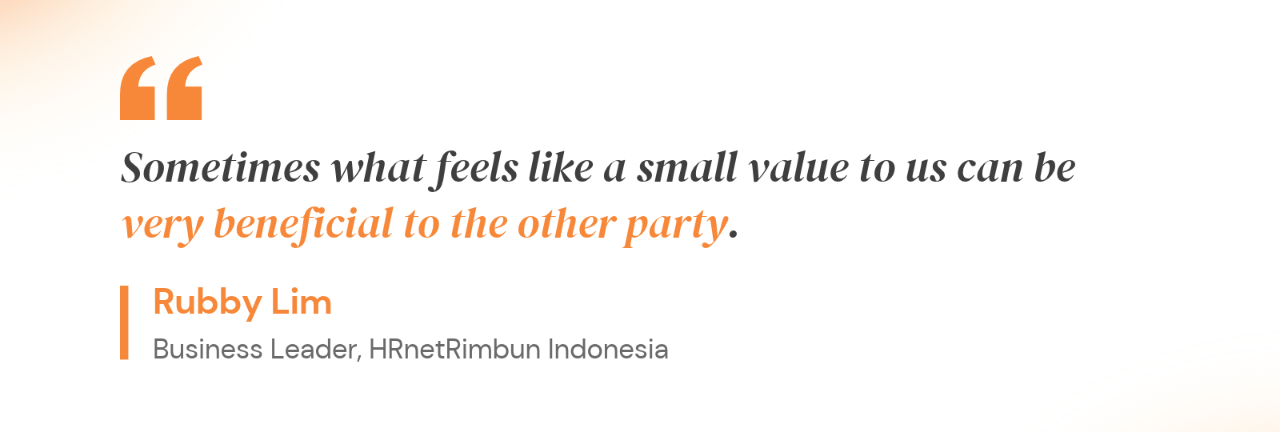
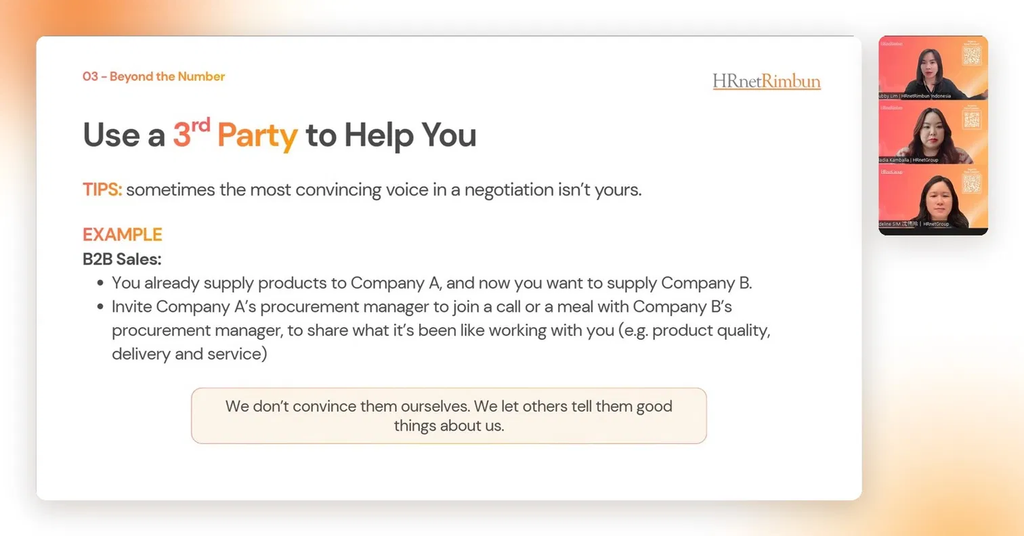
She also shared a strategy she returns to often: letting someone else make the case for you. A trusted third party can carry weight that your own argument can’t. In Rubby’s experience, the most convincing voice in a negotiation is often not your own.
The Question Most of Us Forget to Ask
The final piece was the step many of us skip entirely: asking for the commitment. We explain, we persuade, we explain again, and somehow never get round to saying, “Can we agree on this today?”
Rubby took participants through a set of closing techniques, each suited to a different situation and a different kind of person. In the Case Clinic that followed, the speakers tested them against real, anonymised negotiations shared by participants.
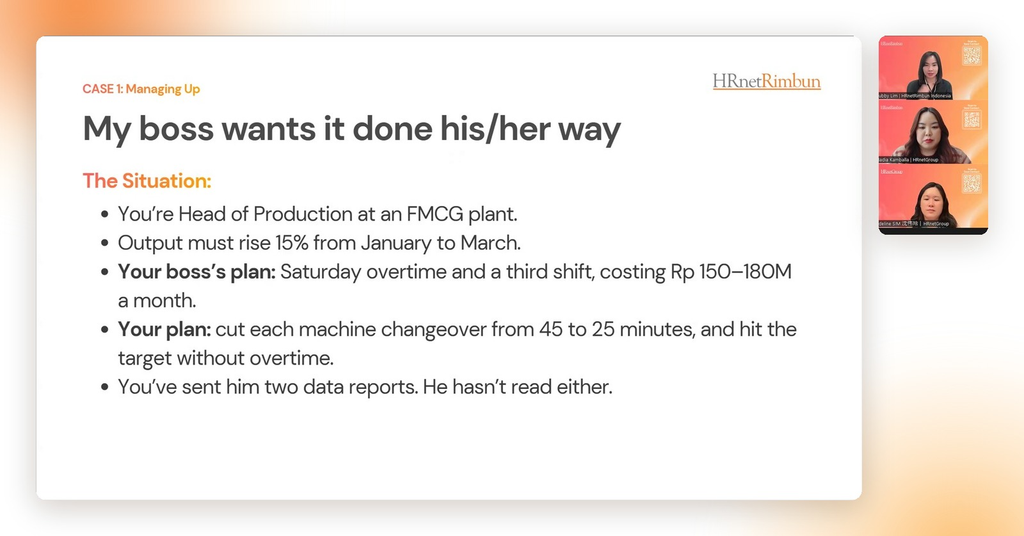
What stood out was how rarely a single technique did the job. In most of the cases, the strongest approach combined several, chosen to fit both the person and the moment. Which, in the end, is what reading the room comes down to.
Thank you to everyone who joined and brought your negotiations into the room so openly. Your cases are what made the afternoon worth having.
If one of your own hiring negotiations has gone quiet, maybe a hard-to-fill role or a candidate sitting on a competing offer, talk to our team. We’d be glad to help you read it.